Indoor Cat Enrichment: DIY Toys & 10-Min Play Routine
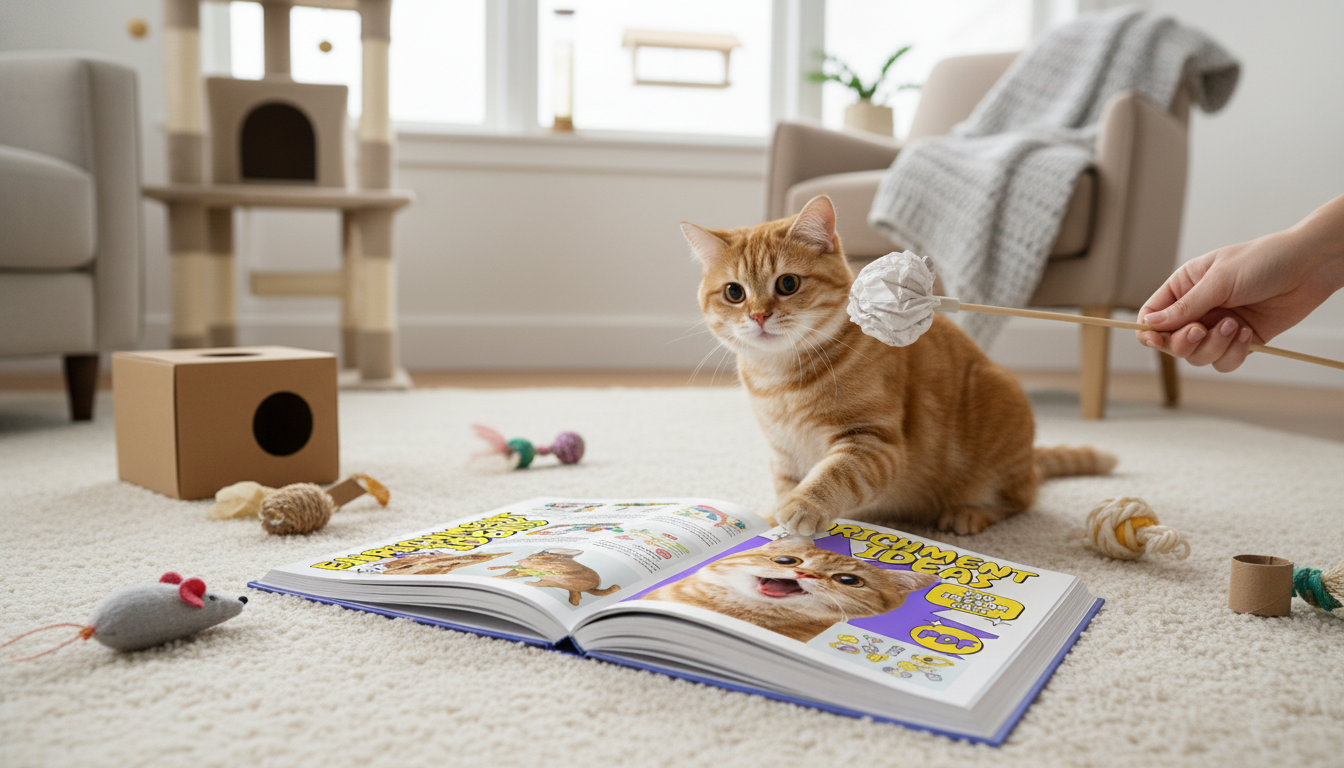
Indoor Cat Enrichment That Fits Real Life: DIY Toys, Daily Play Routines, and a Cat-Friendly Home
Indoor cats thrive when their day includes hunting-style play, exploration, problem-solving, and cozy recovery time. A few intentional choices—short play sessions, simple DIY projects, and a home layout that supports climbing, scratching, and hiding—can make indoor life feel exciting without turning your schedule upside down.
Start With the Basics: What Enrichment Should Provide
The goal isn’t constant activity. It’s a balanced day that matches natural feline instincts and leaves time for rest.
- Hunt-catch behaviors: short bursts of chasing, pouncing, and “winning” at the end.
- Choice and control: multiple resting spots, safe hiding places, and alternate routes through the home.
- Foraging and problem-solving: food puzzles, scavenger hunts, and treat trails.
- Scent and sensory variety: rotating toys, new safe textures, and (where appropriate) cat-safe plants.
- Recovery: quiet time after play, predictable feeding, and undisturbed sleep zones.
For deeper behavior and environment guidance, these references are worth bookmarking: American Association of Feline Practitioners (AAFP) Feline Behavior Guidelines and International Cat Care’s environmental needs overview.
A Simple Daily Play Routine (10–20 Minutes, Twice a Day)
Two short sessions usually beat one long session. Cats often stay more engaged when play ends while they still want a little more.
- Warm-up (1–2 minutes): slow wand teasing near the ground to trigger stalking.
- Sprint and pounce (5–8 minutes): quick direction changes, peek-a-boo behind furniture, and bursts up/down a cat tree (if safe).
- “Catch” and finish (1 minute): allow a successful capture to prevent frustration.
- Cool-down (1–2 minutes): slow the toy, then offer a small meal or a few treats to complete the hunt cycle.
- Consistency tip: schedule around natural peaks (often morning and evening) and keep sessions short for better engagement.
Sample weekly routine (rotate to prevent boredom)
| Day | AM activity (10 min) | PM activity (10–15 min) | Quick enrichment add-on |
|---|---|---|---|
| Mon | Wand toy “mouse” on the floor | Cardboard box maze chase | Treat trail to a perch |
| Tue | Laser + toy catch finale | Fetch with soft pom/ball | Window perch bird watching |
| Wed | Ribbon teaser + tunnels | Puzzle feeder dinner | Catnip or silvervine session |
| Thu | Stairs sprint (if safe) | Paper bag hide-and-pounce | Clicker trick: sit/touch |
| Fri | Feather wand on cat tree | DIY fishing pole toy | Rotate 2 toys back in |
| Sat | Sniffari walk around home | Training: mat/target | New cardboard scratcher |
| Sun | Gentle play for recovery day | Longer wand session + finish | Grooming + calm time |
DIY Toys and Low-Cost Enrichment (Quick Builds)
DIY toys are perfect for rotation: they’re cheap, easy to replace, and often more interesting than a toy that sits out for months.
- Toilet-paper roll treat dispenser: fold ends, poke holes, add a few treats. Supervise if your cat shreds cardboard.
- Sock “kicker”: stuff a sock with fabric scraps, tie off; optional catnip in a small pouch inside.
- Paper ball hunt: crumple paper into loose balls and toss down a hallway; collect after play.
- Cardboard box fort: cut 2–3 “doors,” add a towel, and move the box weekly so it feels new.
- Towel tunnel: roll a towel with a few treats inside for foraging and gentle digging.
Safety essentials: avoid string/elastic unattended, remove staples and tape, and discard items once chewed, soaked, or frayed.
Food Puzzles, Foraging, and “Work for Meals” Options
For many indoor cats, boredom eating and attention-seeking improve when meals require a little searching and thinking.
- Scatter feeding: toss kibble/treats in multiple spots to encourage sniffing and hunting.
- Layered difficulty: start easy (open bowl puzzle) and slowly increase challenge as confidence grows.
- Wet-food enrichment: lick mats or thin smears on a plate slow eating and add soothing, repetitive licking.
- Multiple micro-meals: split daily calories into 3–5 smaller feedings to reduce long “empty” stretches.
- If weight is a concern: measure portions and use part of the regular meal for puzzle time.
The ASPCA’s cat care resources include helpful enrichment context and safety reminders, especially if you’re rebuilding routines after a change at home.
Make the Home Cat-Friendly: A Room-by-Room Checklist
A cat-friendly home doesn’t need to look like a jungle gym. Small placement tweaks can create “yes zones” for climbing, scratching, watching, and hiding.
Rotate, Don’t Overwhelm: Keeping Enrichment Fresh
Troubleshooting Common Challenges
Printable Plan: Turn Ideas Into a Repeatable Week
If you want an organized, ready-to-use setup, this internal resource bundles routines, DIY toy ideas, and home checklists in one place: Printable cat enrichment guide with DIY toys, routines, and home checklists.
For households that feel a little overstretched, calmer human routines can support calmer cat routines. If you’re building a more predictable day, consider pairing your plan with The Anxiety Relief Bundle: A Path to Calm to help maintain steadier schedules and transitions.
FAQ
How much play time does an indoor cat need each day?
Most indoor cats do well with two short sessions (about 10–15 minutes each) tailored to age and energy level. Quality matters more than length—try to follow a hunt-catch-finish pattern, then add micro-enrichment like foraging and window time.
What are safe DIY toys for cats?
Safe options include cardboard treat rollers, paper balls, and sock kickers stuffed with fabric. Avoid leaving string or elastic unattended, remove staples/tape, and toss anything that becomes chewed, soggy, or frayed.
How can enrichment reduce nighttime zoomies?
An evening play session followed by a small meal often helps complete the “hunt cycle” and settle energy before bed. Keep a predictable routine, add daytime stimulation, and contact a vet if zoomies or restlessness appear suddenly or alongside other behavior changes.











Leave a comment