Baby-Proof Fridges & Cabinets: Anti-Open Latch Guide
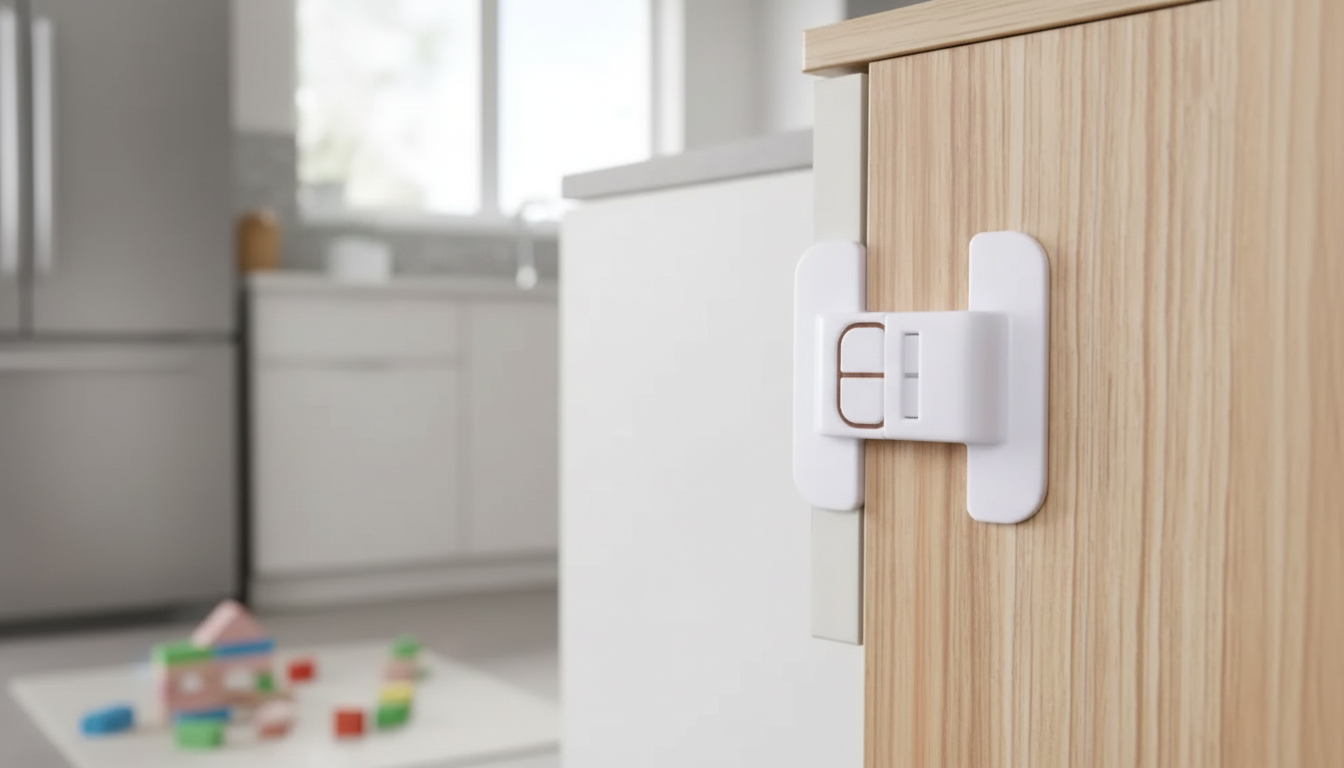
Baby Safety Fridge & Cabinet Lock – Childproof Anti-Open Latch
Curious little hands can open fridges, cabinets, and pantry doors in seconds. A simple childproof latch helps limit access to choking hazards, cleaners, sharp tools, and food spills while keeping everyday routines smoother. This guide covers where these locks help most, how to install them, and what to look for so they work reliably as kids grow.
Why fridge and cabinet locks matter
Cabinet and refrigerator locks are a practical way to add friction to fast-moving toddler curiosity. They don’t replace supervision, safe storage, or proper anchoring of furniture and appliances, but they can reduce the “instant access” moments that lead to injuries and messes.
- Reduces access to household hazards such as cleaning products, medicines, sharp utensils, and small items that can be swallowed.
- Helps prevent heavy doors from being pulled open repeatedly, which can lead to pinched fingers or tipping risks in some setups.
- Supports safer routines during busy moments (cooking, unloading groceries, bedtime).
- Adds a layer of security in homes with toddlers, visiting grandchildren, or pets that learn to paw doors open.
For broader home-safety guidance, review recommendations from the American Academy of Pediatrics, the CDC, and the U.S. Consumer Product Safety Commission.
Best places to use an anti-open latch
Think about places where a child can quickly grab and pull, and where the contents are either hazardous or likely to create a big spill. Start with the rooms used most often, then expand as your child’s reach and climbing skills grow.
- Refrigerator doors: limits snacking, spills, and access to items that require supervision (glass containers, raw foods).
- Lower kitchen cabinets: common location for cleaners, trash bags, plastic wrap, and small gadgets.
- Bathroom cabinets: helps restrict access to toiletries, razors, and medications (store meds securely as well).
- Laundry areas: helps limit access to detergents and pods; keep detergents locked and out of reach for added safety.
- Pantry doors: reduces access to packaged foods, bags, and small items that can create choking hazards.
Where a latch helps most (and what it prevents)
| Location | Common risk | What the latch helps with |
|---|---|---|
| Fridge door | Spills, glass containers, unsupervised snacking | Keeps door closed until an adult opens it |
| Under-sink cabinet | Cleaners, dishwasher tabs, sharp tools | Reduces quick access during crawling/toddler years |
| Bathroom vanity | Razors, cosmetics, medicine bottles | Limits repeated opening and rummaging |
| Laundry cabinet | Detergent pods and liquids | Adds a barrier to accidental contact/ingestion |
| Pantry | Choking hazards, mess from bags/boxes | Prevents frequent opening and dumping |
What to look for in a childproof fridge/cabinet lock
Not all latches feel the same in daily use. The best option is the one that stays put under repeated pulling, opens quickly for adults, and fits the surfaces in your home.
- Secure hold: strong adhesion or mounting method that resists repeated pulling.
- Adult-friendly release: a mechanism that can be opened quickly with one hand, especially when carrying a child or groceries.
- Surface compatibility: works on common finishes (painted wood, laminate, metal, smooth plastic). Clean surfaces improve performance.
- Low-profile design: reduces snagging on clothing and minimizes visual clutter in high-traffic rooms.
- Residue considerations: plan for eventual removal; use gentle techniques to protect finishes.
If a door or drawer is already loose, warped, or misaligned, fix that first—childproofing works best when the cabinet closes cleanly and the latch can engage without twisting.
How to install and use it for reliable day-to-day results
Even the strongest latch can fail if it’s applied over grease, dust, or moisture. A few minutes of prep usually makes the difference between a lock that lasts and one that peels.
- Prep the surface: remove grease and dust; let the area fully dry before applying.
- Choose placement: mount where an adult can reach and a child has the hardest time getting leverage (often higher on cabinet doors, away from edges).
- Press and set: apply firm pressure for a strong bond; avoid repeated opening/closing immediately after install if adhesive needs time to set.
- Test and adjust: pull gently, then more firmly, to confirm the latch holds; reposition if the door edge flexes too much.
- Keep consistent: lock every time—partial use teaches kids the “sometimes it opens” pattern.
Common issues and quick fixes
Safe-home habits to pair with locks
Product picks to support safer routines
Primary option
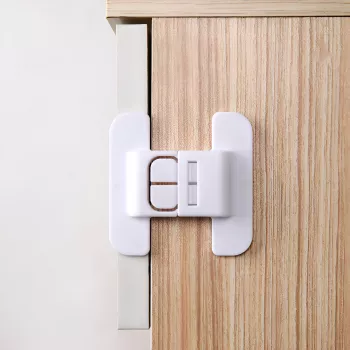
Baby Safety Fridge & Cabinet Lock – Childproof Anti-Open Latch is designed to help keep refrigerator and cabinet doors closed against toddler pulls. It’s a useful add-on for kitchens, bathrooms, and laundry areas where quick access needs to be limited.
Helpful add-ons for busy parent life
- Homework Help Made Easy Toolkit for Parents – Printable Guide for Creating Study Habits, Homework Strategies & Independent Learning
- The Anxiety Relief Bundle: A Path to Calm | 4-in-1 Bundle
FAQ
Will a childproof latch damage cabinets or a fridge surface?
Most adhesive latches are made to be removable, but results depend on the finish and how removal is done. For best outcomes, apply only to clean, smooth surfaces and avoid areas with peeling paint; when removing, warm the adhesive gently and peel back slowly to reduce the chance of residue or finish lift.
Where should the lock be placed for the best child resistance?
Place it where an adult can reach easily but a child can’t get leverage—typically higher on the door and away from edges or handles. Make sure both sides align so the latch fully engages without twisting or sitting at an angle.
What if my toddler figures out how to open it?
Move the latch higher, keep usage consistent, and shift hazards to locked or high storage so “getting in” still doesn’t equal access. In persistent cases, use multiple layers (different lock styles on the most critical cabinets) and rotate which doors are latched as your child’s skills change.








Leave a comment