3-Ton Triple-Bag Air Jack: Wheels, Long Handle Lift
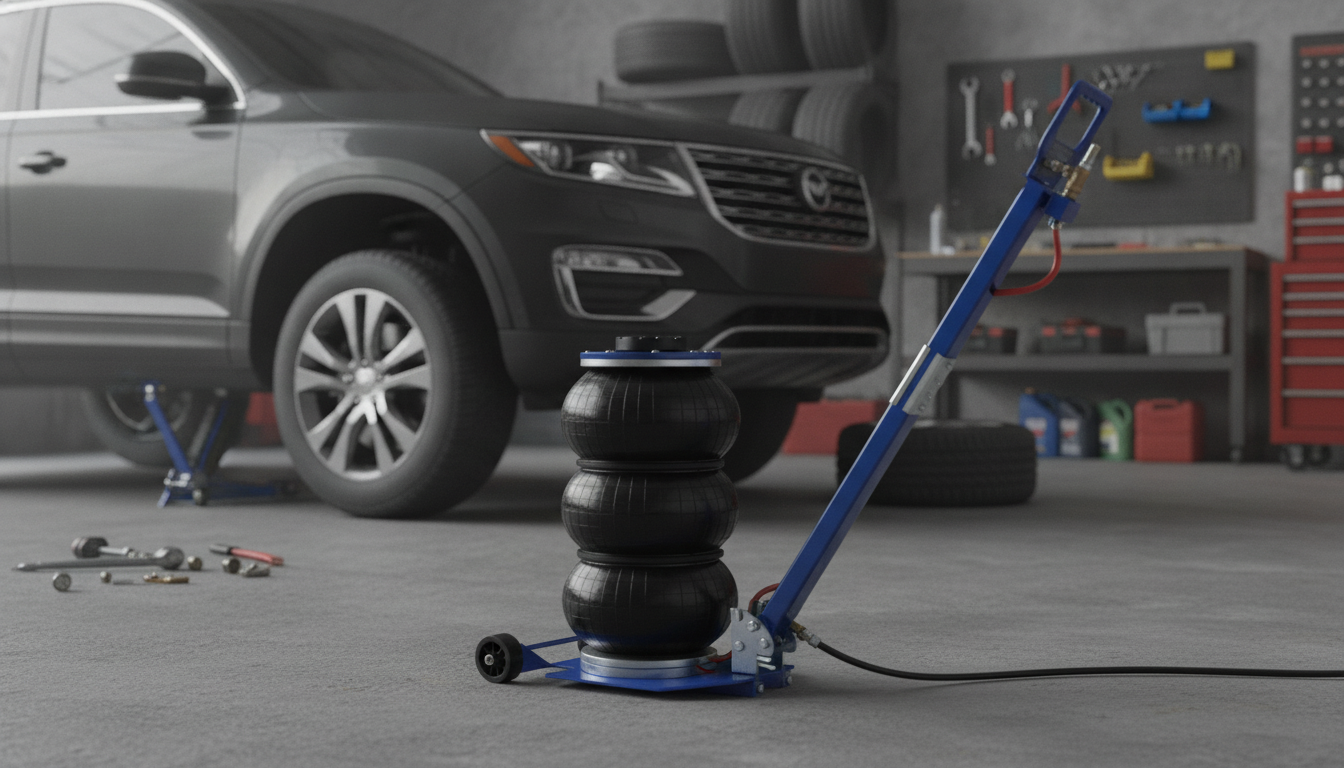
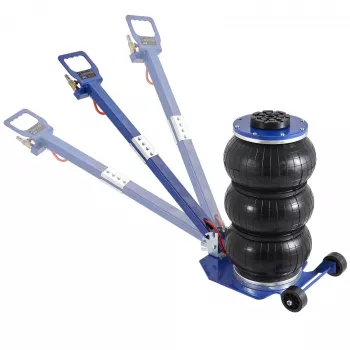
3 Ton Triple Bag Pneumatic Air Jack with Wheels & Long Handle
A triple-bag pneumatic air jack is built for fast lifting with shop air, reducing effort compared with manual jacks. With a 3-ton capacity, wheels for positioning, and a long handle for leverage and control, this style of jack fits busy garages, tire shops, and DIY users who want quick, repeatable lifts—while still relying on proper support stands and safe lifting points.
What This Air Jack Is Designed to Do
A pneumatic air bag jack focuses on speed and simplicity: connect to compressed air, place it correctly, and lift without the repetitive pumping of a traditional floor jack.
- Raises vehicles quickly using compressed air rather than continuous pumping.
- Triple-bag design spreads load and helps stabilize the lift on uneven shop floors.
- Wheels assist with sliding the jack into position under side sills or subframes.
- Long handle helps guide placement and control the jack during lift and descent.
- Best suited for tire changes, brake work, detailing tasks, and short-duration lifts when paired with jack stands.
Key Features That Matter on the Shop Floor
In real-world use, the “nice-to-have” features are the ones that save time without adding risk—especially when the workday includes repeated lifts.
- 3-ton maximum capacity for many passenger vehicles and light trucks; always confirm vehicle weight and lifting-point ratings.
- Triple air bags compress and expand smoothly for rapid height changes with less physical strain.
- Rolling base helps align the saddle under a safe lift point without dragging.
- Long handle keeps hands farther from pinch points and offers better directional control.
- Air-control hardware (valve/connector) should be checked for leaks and secure fittings before each use.
- A wide, stable footprint helps reduce side-to-side sway during initial lift.
Because this tool depends on compressed air, treat the air system like part of the lifting tool. General compressed-air safety guidance from OSHA is a helpful reference for safe handling practices in shop environments.
Specifications and What to Compare
Not every 3-ton air bag jack behaves the same. Small differences—minimum height, wheel quality, and air hardware—can determine whether the jack feels effortless or frustrating.
Quick Comparison Checklist for a 3-Ton Triple-Bag Air Jack
| Item to Check | Why It Matters | What to Look For |
|---|---|---|
| Capacity | Prevents overload and instability | 3 tons max, with margin over expected load |
| Minimum height | Determines fit under low vehicles | Low profile enough for your lowest clearance |
| Maximum height | Determines usable working clearance | Enough lift to place jack stands safely |
| Air fittings | Leak-free operation and safety | Secure connectors, tight seals, no hissing |
| Base and wheels | Positioning and stability | Wide base, smooth-rolling wheels |
| Handle design | Control and comfort | Long handle, easy-to-reach controls |
- Capacity rating: confirm the jack’s maximum load is comfortably above the corner weight being lifted.
- Air requirements: ensure a compressor can maintain adequate pressure and airflow for consistent lifting.
- Lift range: confirm minimum height fits under low-clearance vehicles; confirm maximum height reaches the needed working clearance.
- Mobility: wheel quality and base stability affect how easily the jack tracks into position.
- Handle length and angle: longer handles improve control and reduce bending, especially for repetitive tire work.
- Build quality: look for reinforced seams, durable fittings, and a stable saddle/contact pad.
Setup: Compressor, Connection, and Placement
A clean setup routine reduces misfires, slow lifts, and unexpected movement—especially when you’re working quickly.
- Compressor readiness: drain moisture from the tank when needed and verify the regulator and gauge function properly.
- Hose and coupler: use a hose rated for the working pressure; confirm quick-connect fittings lock fully.
- Surface prep: use the jack on solid, level ground; avoid gravel, soft asphalt in heat, or sloped driveways.
- Chocking and parking: set the parking brake and chock wheels before lifting.
- Placement: align the saddle under manufacturer-recommended lift points (pinch welds, reinforced subframe points).
- Test lift: apply air briefly to confirm stable contact before raising higher.
Safe Lifting Workflow (Air Jack + Stands)
Air jacks are for lifting—stands are for holding. A consistent workflow keeps the speed advantage without taking shortcuts on support.
For broader shop safety context (including common risks around vehicle servicing), consult resources from NIOSH.
Common Use Cases and Who It Fits Best
Maintenance, Storage, and Troubleshooting
In-Stock Picks
- 3 Ton Triple Bag Pneumatic Air Jack with Wheels & Long Handle (In stock)
- The Smart Traveler’s Guide to Global Etiquette | Digital Download eBook for Cultural Tips, Travel Etiquette, and International Manners (In stock)
- The Anxiety Relief Bundle: A Path to Calm | 4-in-1 Bundle | Mindfulness Exercises, Positive Thinking, Printable Checklist & Course Outline (In stock)
FAQ
Can a pneumatic air jack be used without jack stands?
No. A jack is intended to lift, while jack stands are designed to support; always lower the vehicle onto properly rated stands at approved support points before working underneath.
What air pressure and compressor setup is typically needed for an air bag jack?
Use the jack’s specified working pressure with a regulated air supply, and ensure your hose and quick-connect fittings are pressure-rated and lock securely. The compressor should be able to maintain pressure during the lift without significant drop-off.
Will a triple-bag air jack fit under low-clearance cars?
It depends on the jack’s minimum height versus the vehicle’s ground clearance at the recommended lift point. If clearance is tight, ramps or an alternate lifting approach may be necessary to create enough space for correct placement.










Leave a comment