How-To Guide vs How to Guide: Which Is Correct?
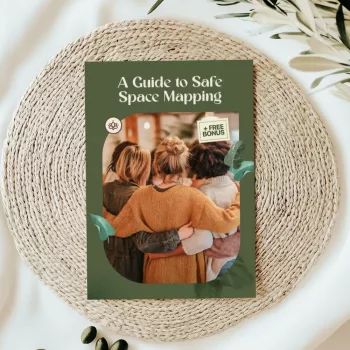
How to guide or how to guide?
The correct form is “how-to guide” when you’re using it as a compound adjective before a noun: a how-to guide, a how-to video, or a how-to checklist. When you’re using it as a question or phrase on its own, “how to guide” is also acceptable, but it usually reads as incomplete unless it’s followed by a verb or an object (for example, “how to guide new users” or “how to guide someone through a process”).
Which one should you use for titles and product pages?
For headlines, category labels, and resource titles, “how-to guide” is the clearer choice because it signals a step-by-step instructional resource. It’s also the more common convention in American English for naming tutorials. Example: How-To Guide: Safe Space Mapping.
When does “how to guide” make sense?
Use “how to guide” when “guide” is a verb, meaning to lead or direct. Example: How to guide a friend through creating a personal safety plan. In that sentence, “guide” isn’t the type of content—it’s the action.
A quick rule to remember
If “guide” is a thing you’re offering, write how-to guide. If “guide” is something someone does, write how to guide.
For a practical example of a true how-to resource, see this step-by-step guide on building a safer routine with mapping and planning: https://rareoffersrealm.shop/guide-safe-space-mapping-personal-safety-plan/.
For How-To Guide vs How to Guide: Which Is Correct?, the best answer depends on fit, material, care instructions, and how the product will be used day to day.
Checking those details first helps avoid a poor match and keeps the choice practical after delivery.
For How-To Guide vs How to Guide: Which Is Correct?, the best answer depends on fit, material, care instructions, and how the product will be used day to day.
FAQ
What is safe space mapping?
Safe space mapping is the process of identifying places, routes, and people that help you feel safer in different situations. It’s often used to plan ahead for travel, daily routines, or moments of increased risk.












Leave a comment