5–15 Minute Printable Journal for Mindfulness & Gratitude
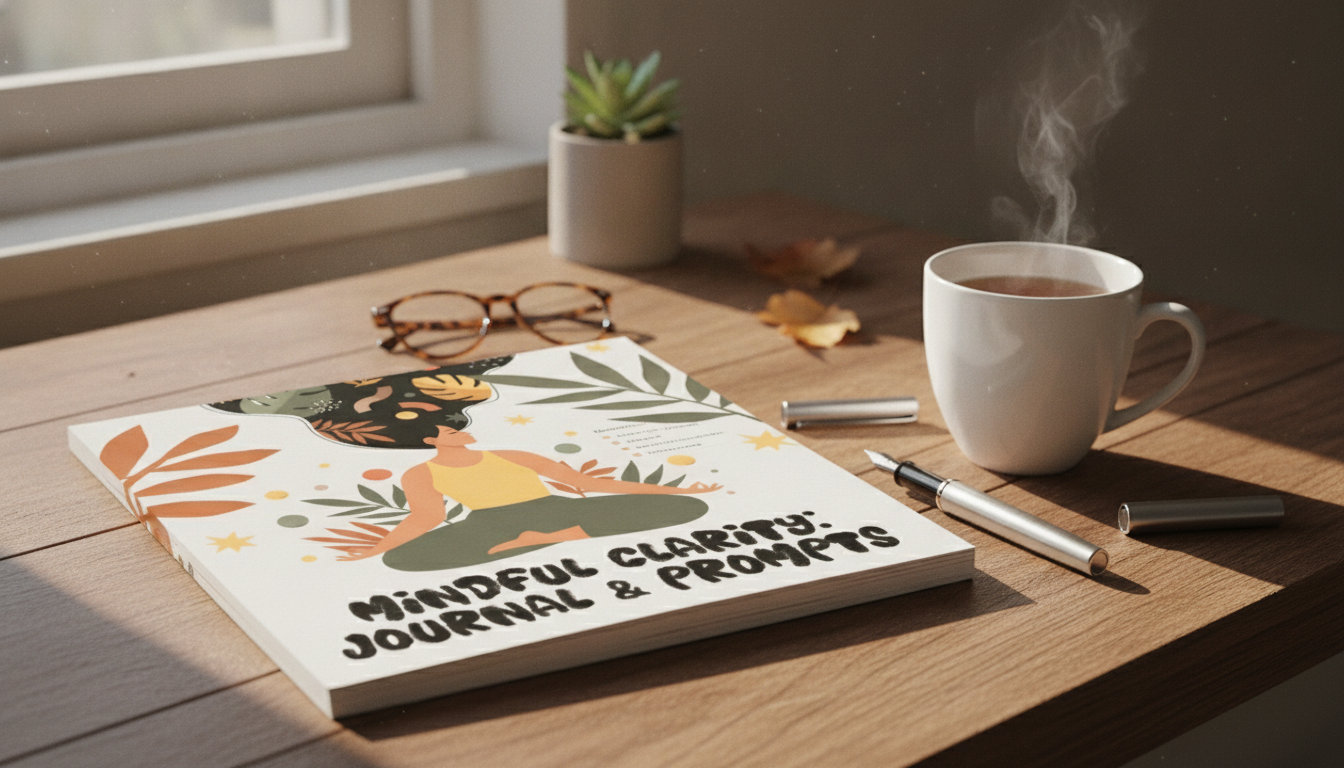
A simple daily journaling rhythm can support steadier attention, kinder self-talk, and more intentional choices. Mindful Clarity: Journal & Prompts (Printable) is designed to be easy to start and flexible to keep—combining short mindfulness check-ins, gratitude exercises, and reflective quotes that guide writing without feeling overwhelming. It’s a gentle way to create a reliable pause in the middle of busy days, high-stress seasons, or “I don’t know what I’m feeling” moments.
What this printable journal helps build over time
Consistency matters more than intensity. When the pages are simple enough to return to, they begin to shape helpful patterns that carry into the rest of your day.
- A repeatable daily pause that makes it easier to notice thoughts, emotions, and body signals before reacting
- A gratitude practice that moves beyond “listing” into meaning (why something mattered and what it revealed)
- Clearer patterns: common stressors, energy drains, helpful supports, and small wins worth repeating
- More balanced perspective by pairing reflection with practical next steps for the day
- A low-pressure way to keep a record of progress, even on difficult weeks
Mindfulness and gratitude are also well-supported approaches for overall well-being. For additional background, see the American Psychological Association’s overview of mindfulness and the National Center for Complementary and Integrative Health on meditation and mindfulness.
What’s included inside Mindful Clarity
These pages are intentionally lightweight: short enough to use on a normal day, structured enough to use when your mind feels scattered.
- Daily mindfulness check-ins to name what’s present: mood, sensations, and mental load
- Gratitude exercises that invite detail (who/what/when) and action (how to pay it forward)
- Reflective quotes that serve as a gentle focus, not a rule—use them as a writing starting point or a closing thought
- Short prompts that fit a busy schedule while still encouraging honest, specific answers
- Printable format for binder, folder, or single-page daily use
A simple daily structure (mix-and-match in 5–15 minutes)
| Section | Time | Example focus |
|---|---|---|
| Mindfulness check-in | 1–3 min | What am I feeling right now, and where do I feel it in my body? |
| Gratitude exercise | 2–5 min | One thing that helped today, why it mattered, and how to acknowledge it |
| Reflection prompt | 3–7 min | What is one belief I can loosen to make room for calm? |
| Closing intention | 1–2 min | One small next step I can do in under 10 minutes |
A 7-day “clarity reset” routine using the pages
If you want momentum without overhauling your schedule, try a one-week reset. Each day stays focused, so you can learn what actually helps you feel grounded.
- Day 1: Start where you are—write without fixing anything; aim for accuracy, not positivity
- Day 2: Track attention—note the top three distractions and one boundary that would help
- Day 3: Gratitude with texture—describe one moment in sensory detail (what was seen/heard/felt)
- Day 4: Stress inventory—identify one controllable and one uncontrollable factor; release the second
- Day 5: Relationships check—name one person to appreciate and one conversation to approach gently
- Day 6: Self-trust—write one promise that is small enough to keep today
- Day 7: Review—circle repeated themes and choose one habit to carry forward next week
How to get more from mindfulness pages without adding pressure
The goal isn’t “perfect” insight—it’s steadier self-awareness. When you keep the process gentle, you’ll notice more and avoid burnout.
- Keep entries short on hard days: a few honest lines beats skipping entirely
- Use the “one breath rule”: take one slow inhale/exhale before writing the first word
- Write in plain language; avoid trying to sound insightful—clarity comes from specificity
- When emotions feel intense, label first (“anxious,” “sad,” “overstimulated”) before analyzing
- End with a tiny action (drink water, step outside, send one message, tidy one surface) to reinforce agency
Gratitude exercises that feel real (not forced)
Gratitude works best when it stays honest—especially on complicated days. A practical approach is to connect the “what” to the “why,” and then to a small behavior.
- The “because” method: write the gratitude item, then add “because…” and finish the sentence
- Credit the support: include people, systems, and your own effort—gratitude can include self-recognition
- Look for neutral-to-good moments: a calm commute, a helpful email, a quiet room
- Turn gratitude into behavior: one small way to express thanks or replicate the helpful condition
- If the day was rough: gratitude can be “what got me through” rather than “what was wonderful”
For more on why gratitude practices can be beneficial, the Greater Good Science Center offers an accessible overview of gratitude and how it relates to well-being.
Who it fits best (and how to adapt it)
A calmer next step: printable journaling that’s easy to start
If you want a simple, structured place to begin, Mindful Clarity: Journal & Prompts (Printable) offers a steady daily format you can customize. For added support during especially anxious or overwhelmed weeks, pair it with The Anxiety Relief Bundle: A Path to Calm to build a broader toolkit alongside your journaling habit.
FAQ
How long should a daily entry take?
Most entries take 5–15 minutes. On busy days, do a 3-minute minimum: one quick check-in, one gratitude line, and one small intention; on calmer days, add a longer reflection prompt.
Is this better for mornings or evenings?
Mornings are great for setting intention and choosing a focus, while evenings help you review patterns and create closure. Try each for three days and keep the one that feels easiest to repeat.
What if journaling brings up difficult feelings?
Slow down and ground first—feel your feet on the floor and take a steady breath. Write facts before interpretations, and consider professional support if distress feels intense or persistent; the journal is supportive, not a substitute for care.









Leave a comment