Hidden-Button Door Lever Lock: Toddler-Proof Any Room
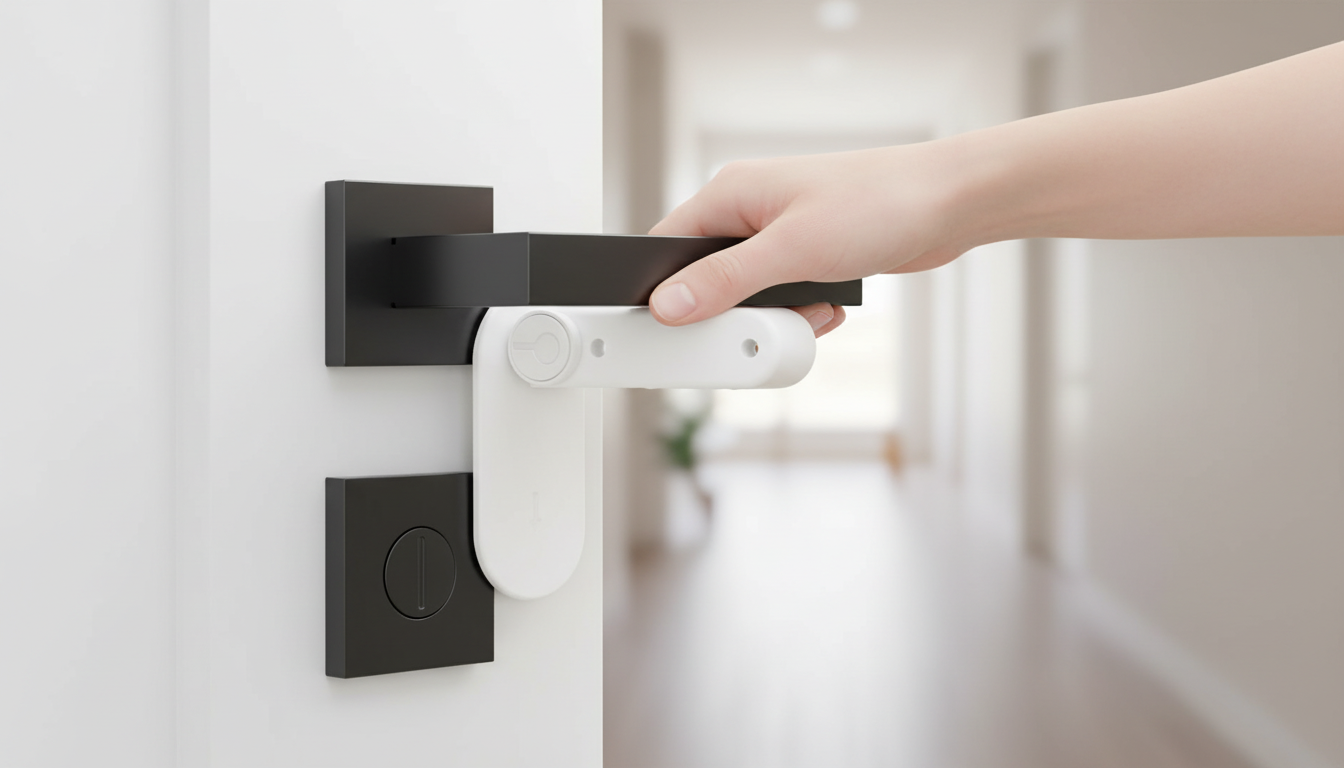
Universal Childproof Door Lever Safety Lock with Hidden Button
A door lever can be easy for toddlers to push down, turning a normal room into a quick escape route or a way into off-limits spaces. A universal door lever safety lock with a hidden button adds a simple barrier while keeping everyday access comfortable for adults and caregivers. It’s a practical upgrade for homes that use lever handles (instead of round knobs), especially in busy seasons when routines change and supervision is split between meals, laundry, and bedtime.
Why door lever locks matter in a child-safe home
Lever handles are designed for convenience, which is great—until a curious child realizes that “push down” opens doors. A dedicated lever lock helps create consistent boundaries and reduces the chance of quick, silent access to higher-risk areas.
- Helps limit access to hazards such as bathrooms (cleaners/medications), kitchens (sharp tools/heat), garages (chemicals/tools), and stairwell doors.
- Reduces wandering risk during naps, nighttime, or busy moments when supervision is split.
- Adds a consistent routine: adults use the same release method each time, making safety habits easier to maintain.
- Works as an extra layer alongside gates, cabinet latches, and outlet covers—especially in homes with open layouts.
For broader home-safety planning and age-based guidance, authoritative resources like the American Academy of Pediatrics home safety pages and the U.S. Consumer Product Safety Commission safety guides can help prioritize which rooms to secure first.
What a hidden-button door lever lock does differently
Not all lever locks work the same way. Hidden-button styles focus on disrupting the “press lever = door opens” pattern that toddlers master quickly.
- Hidden-button release is designed to be intuitive for adults but less obvious to young children who rely on pushing/pulling patterns.
- Keeps the lever from fully engaging when pressed normally, helping prevent a child from opening the door by simply pushing down.
- Aims to preserve normal use for adults without needing keys, tools, or a separate latch step.
- Suitable for many common interior lever styles where a standard lever action is the main access point.
This approach is especially helpful on doors that adults open frequently throughout the day—bedrooms, hallways, bathrooms—where a complicated latch could get skipped “just this once.”
Key features to look for before buying
“Universal” is a helpful starting point, but real-world fit depends on the handle shape, spacing, and how the lock sits once installed.
- Compatibility: confirm the lock is made for lever handles (not round knobs) and can accommodate the shape/size of the lever base.
- Installation method: adhesive-based installs are fast and rental-friendly; screw-mounted options can be more permanent.
- Release ergonomics: a hidden button should be reachable and easy to press for adults with one hand while holding a child or items.
- Durability: look for a sturdy body that resists flexing and stays aligned with repeated use.
- Finish and profile: low-profile designs are less likely to snag on clothing or bags and blend into the door hardware.
A quick pre-check: close the door and confirm there’s enough clearance between the lever area and any nearby trim, door frames, or decorative backplates that could interfere with alignment.
At-a-glance comparison: common door lever safety approaches
| Option | How it restricts access | Best for | Trade-offs |
|---|---|---|---|
| Hidden-button lever lock | Requires pressing a less-obvious release to operate the lever | Everyday doors used often (bedrooms, hallways, bathrooms) | Adult learning curve; needs good placement/alignment |
| Latch-style strap/hasp (non-lever-specific) | Adds a secondary latch point above or beside the handle | High-risk doors (cleaning supply closets, garages) | Slower to use; can be more noticeable |
| Top-of-door secondary lock | Places the lock higher than a child can reach | Doors where adult-only access is acceptable | May reduce accessibility for shorter adults or some caregivers |
| Childproof knob cover (for round knobs) | Cover spins unless squeezed/gripped correctly | Homes with round knobs instead of levers | Not applicable to lever handles |
Where this type of lock works best at home
Installation and daily use tips
Safety notes and realistic expectations
Product spotlight: Universal Childproof Door Lever Safety Lock with Hidden Button
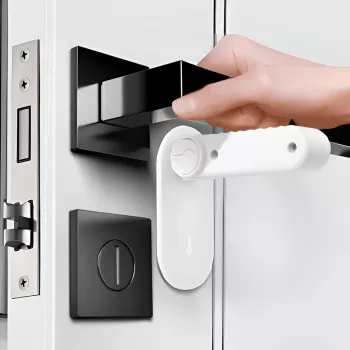
For families building safer boundaries room by room, the Universal Childproof Door Lever Safety Lock with Hidden Button is designed to fit a wide range of lever-style door handles for child-resistant control of room access. The hidden-button release helps keep operation simple for adults while remaining less intuitive to toddlers, making it a budget-friendly add-on for everyday interior doors.
In higher-risk spaces, pair door-lever protection with safer storage habits (locked cabinets, out-of-reach chemicals, secured medications). And as kids grow into school routines, organization helps safety too—keeping supplies contained and distractions lower. The Homework Help Made Easy Toolkit for Parents can support calmer routines that reduce frantic “where is it?” moments when doors get left ajar.
FAQ
Will a universal door lever lock fit any lever handle?
“Universal” fits many common lever styles, but not all. Check the lever shape, base size, and nearby trim clearance to ensure the lock can sit flat and won’t interfere with the latch or hardware.
Can adults still open the door quickly in an emergency?
Hidden-button designs are meant to be fast once familiar. Practice the release with all caregivers and make sure it can be operated one-handed so access stays quick when it matters.
Do adhesive-mounted lever locks damage paint or finishes?
Strong adhesive can lift paint or leave residue, especially on older or poorly bonded finishes. If removal is needed later, follow the manufacturer’s steps and use gentle heat to help release adhesive more cleanly.






Leave a comment