Gentle Parenting Scripts for Tantrums & Boundaries
What gentle parenting looks like in real life
Gentle parenting is often described as “kind but firm,” but it becomes much easier to practice when it’s defined in everyday behaviors. It’s not about having a perfectly calm household—it’s about leading with connection while keeping limits clear and predictable.
- Warmth plus structure: A caring tone and steady boundaries can exist at the same time. Kids relax when rules don’t change based on adult mood.
- Connection first: Before correcting, get down to your child’s level, make eye contact, and use a calm voice. This helps their brain “hear” you.
- Behavior as a signal: Big reactions often have a simple driver: hunger, fatigue, overstimulation, or a skill gap (waiting, sharing, handling disappointment).
- Respectful authority: Adults set the boundary; kids get coaching to build the skill. You can be compassionate without handing over the decision.
- Repair and reconnection: After conflict, a short reset rebuilds trust: name what happened, restate the boundary, and reconnect.
Empathic communication basics: the 3-step script
Empathic communication doesn’t require a long speech. A simple three-part script can reduce escalation while keeping you in charge.
- Name the feeling: “You’re really frustrated.” (If you guessed wrong, adjust: “Okay—more disappointed than mad.”)
- Name the need or reason: “You wanted more time,” or “You didn’t expect that change.”
- State the limit and next step: “It’s time to stop now. You can choose A or B.”
During a meltdown, keep it short. Save explanations for later, when your child is calm. Instead of pressure questions like “Why did you do that?” try a neutral observation: “I saw you hit when you were mad.” That makes space for skill-building without adding shame.
Empathic phrases that hold a boundary
| Moment | What to say | Boundary/next step |
|---|---|---|
| Tantrum in public | “This is hard. You wanted to stay.” | “We’re leaving now. You can hold my hand or ride in the cart.” |
| Hitting/kicking | “You’re angry. I won’t let you hit.” | “I’m moving back. Hands stay on your body. Let’s stomp or squeeze a pillow.” |
| Refusing to get dressed | “You don’t feel like changing.” | “Clothes need to go on. Choose the blue shirt or the green one.” |
| Sibling conflict | “You both want the same thing.” | “I’m going to pause the toy. We’ll take turns with a timer.” |
| Homework struggle | “Your brain is tired of this.” | “We’ll do 10 minutes, then a 2-minute break. I’ll sit nearby.” |
Boundaries without battles: limits that stay kind and firm
Boundaries are where gentle parenting becomes truly practical. The goal is to reduce power struggles by making limits clear, brief, and consistent.
- Use “when/then” language: “When toys are picked up, then we can read.” It’s clear and avoids lectures.
- Offer two acceptable choices: Choices work best when both options are parent-approved. Avoid open-ended “What do you want?” in a moment that needs structure.
- State the limit once, then follow through: Repeating can turn into negotiation. Calm action is often more effective than more words.
- Separate the child from the behavior: “You’re a good kid having a hard moment.” This protects self-worth while you correct the behavior.
- Use related, immediate consequences: If crayons go on the wall, crayons take a break and the wall gets cleaned together. The lesson connects to the action.
Co-regulation: helping kids calm down before teaching
When a child is in “alarm mode,” their thinking brain goes offline. Co-regulation is the bridge that helps them return to calm so they can learn.
- Regulate the adult first: Exhale slowly, drop your shoulders, lower your voice. Your nervous system sets the tone.
- Use body-based tools: Breathe together, place a hand on the heart, count steps, or sip water—simple actions that signal safety.
- Create a calm-down corner (not a punishment): Soft light, a few sensory items, a couple books, and a feelings chart can help kids practice coping skills.
- Label the transition: “Your body is in alarm mode. Let’s help it settle.” This normalizes big feelings without excusing unsafe behavior.
- Teach later, not mid-storm: Once calm, briefly review what happened and practice a replacement skill (asking for a turn, using words, stomping feet instead of hitting).
Common moments and gentle responses that actually work
Gentle parenting shines when it’s built into routines. A few small changes can prevent many blowups before they start.
For more guidance on age-appropriate behavior and support strategies, helpful references include American Academy of Pediatrics (HealthyChildren.org), the CDC Essentials for Parenting, and Zero to Three.
Repair after conflict: what to do when voices rise
Daily habits that make gentle parenting easier
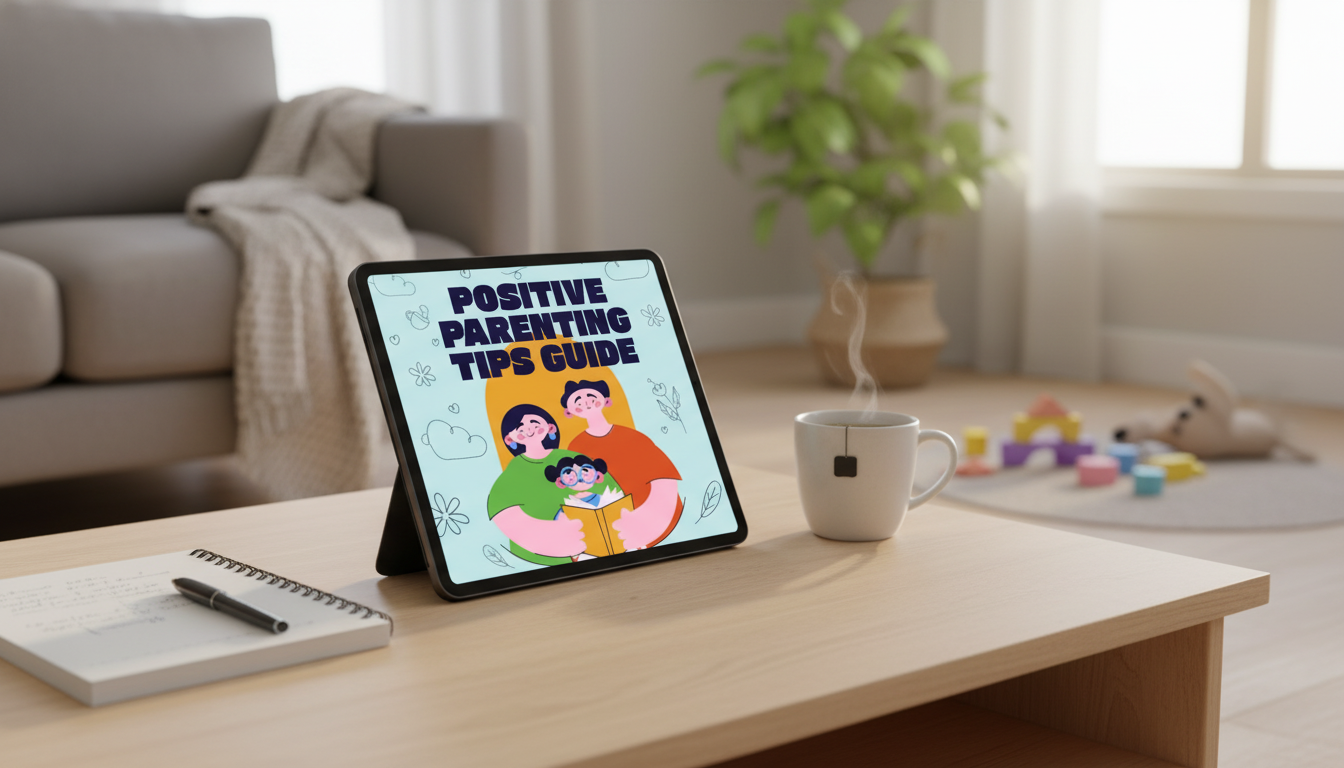
Gentle parenting resource for moms and dads (digital download)
- Positive Parenting Tips Guide | Gentle Parenting eBook | Empathic Communication | Digital Download for Moms & Dads
- Homework Help Made Easy Toolkit for Parents – Printable Guide for Creating Study Habits, Homework Strategies & Independent Learning
FAQ
Is gentle parenting the same as permissive parenting?
No. Gentle parenting includes clear limits and calm follow-through, while permissive parenting tends to avoid boundaries. For example: “I know you’re mad, and I won’t let you hit—let’s stomp feet instead,” is warm and firm at the same time.
What can be said when a child is yelling or refusing to listen?
Use fewer words: “You’re upset. I can’t understand yelling. You can use a calm voice here or take a minute in the calm corner.” Then wait for calm before teaching or problem-solving.
How long does it take for gentle parenting to start working?
Some shifts can happen quickly (less escalation when you stay calm and consistent), but skill-building usually takes weeks. Progress speeds up with predictable routines, repeatable scripts, and quick repairs after conflict.










Leave a comment