Anxiety Relief Bundle: 4 Tools for a Calmer Week
The Anxiety Relief Bundle: A Path to Calm (4-in-1 Bundle)
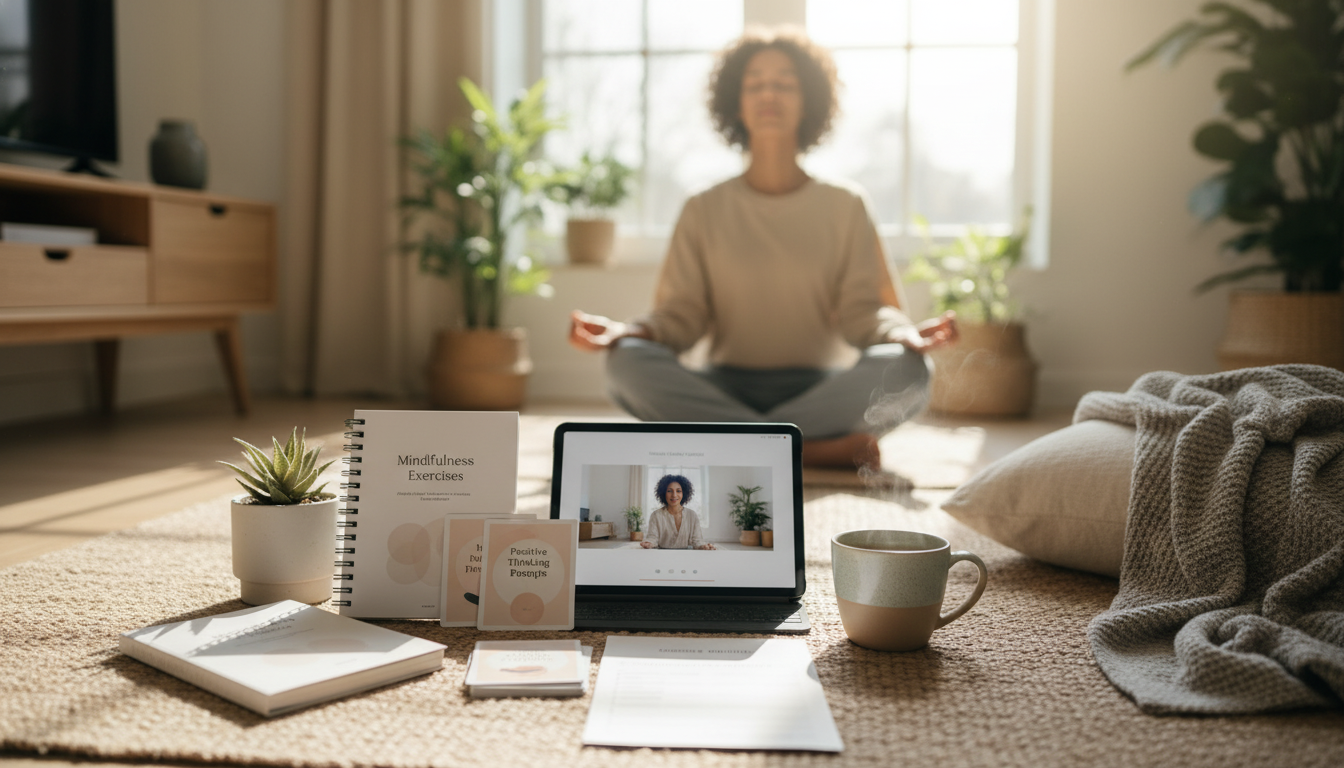
Feeling stuck in a loop of worry, tension, and “what if” thoughts can make even simple days feel heavy. The Anxiety Relief Bundle: A Path to Calm brings together four practical tools—mindfulness exercises, positive-thinking prompts, a printable checklist, and a course-style outline—so calming skills are easier to learn, practice, and repeat when anxiety shows up.
Instead of trying to remember the “right” thing to do while stressed, this bundle is designed to make the next step obvious: notice what’s happening, choose a grounding practice, reframe the thought in a realistic way, and keep a simple plan you can follow even on hard days.
What’s included in the 4-in-1 bundle
This 4-in-1 set is built to work as a complete system or as mix-and-match support depending on what you need that day.
- Mindfulness exercises designed to build present-moment awareness and reduce spiraling thoughts.
- Positive-thinking activities that help reframe anxious patterns into more balanced, realistic self-talk.
- A printable checklist to support consistency and make “what to do next” feel clear during stressful moments.
- A course outline that organizes the materials into a step-by-step learning path (helpful for self-paced practice).
- Digital-friendly structure that fits short daily sessions or longer weekly routines.
Who this bundle fits best
- People who want a structured routine instead of relying on motivation alone.
- Busy schedules that need short, repeatable calming practices (5–15 minutes).
- Those who prefer guided prompts and checklists rather than starting from scratch.
- Anyone building a personal “calm toolkit” for work stress, social anxiety, health worries, or general overwhelm.
- Users who like tracking progress and noticing what techniques work best over time.
If you’re also juggling major life transitions, pairing tools can help. For new parents, consider adding the First-Time Parent Survival Guide for practical support around sleep, emotions, and the early-week overwhelm that can intensify anxious thoughts.
A simple way to use it: a 7-day “reset” routine
One of the fastest ways to feel more capable around anxiety is to create a short loop you can repeat. Use this 7-day reset as a starting point, then recycle what works.
- Day 1: Baseline check-in—identify common triggers, body signals, and top recurring thoughts.
- Day 2: Mindfulness micro-practice—choose one short exercise and repeat it twice (morning/evening).
- Day 3: Thought reframing—practice a positive-thinking prompt to soften catastrophic predictions.
- Day 4: Nervous-system support—pair mindfulness with a calming environment cue (music, warm drink, light stretch).
- Day 5: Exposure to “small discomfort”—take one manageable step that anxiety usually blocks, then reflect.
- Day 6: Build a coping menu—select 3 go-to practices and add them to the checklist for quick access.
- Day 7: Review and adjust—keep what worked, remove what didn’t, and plan the next week with the course outline.
Quick-start weekly plan (mix and match)
| Day | Primary focus | Time needed | What to write down |
|---|---|---|---|
| 1 | Trigger + body awareness | 10–15 min | Top 3 triggers; first body signs; 1 helpful response |
| 2 | Mindfulness repetition | 5–10 min | What changed before vs. after the practice |
| 3 | Positive-thinking prompt | 10 min | Old thought; balanced alternative; evidence for/against |
| 4 | Calming routine stack | 10–20 min | Practice + cue used; stress level (1–10) |
| 5 | Small brave step | 10–30 min | What was avoided; what was done; what was learned |
| 6 | Coping menu | 10 min | 3 reliable tools; when to use each |
| 7 | Review | 10–15 min | Wins; sticking points; next week’s plan |
Mindfulness exercises: building steadier attention
Mindfulness is less about “clearing your mind” and more about changing your relationship with what’s happening inside it. Anxiety often feels urgent because thoughts and body sensations fuse into one story that demands immediate action.
For more background on how anxiety can show up in the body and daily life, the National Institute of Mental Health offers a helpful overview.
Positive thinking that stays realistic (not forced)
The American Psychological Association also summarizes common anxiety experiences and coping approaches that can complement a steady self-guided practice.
Printable checklist: a calm plan for high-stress moments
If anxiety is affecting family routines or school nights, pairing calmer adult coping with practical home structure can help. The Homework Help Made Easy Toolkit for Parents is a simple add-on for building steadier homework habits with less stress.
Course outline: turn techniques into a repeatable system
When to get additional support
Product details and where to get it
If a structured, repeatable calm routine sounds helpful, you can find the full bundle here: The Anxiety Relief Bundle: A Path to Calm (4-in-1 Bundle).
FAQ
How quickly can results be noticed?
Some people feel a small drop in intensity after one practice, especially with a grounding exercise. Steadier change usually comes from daily repetition over a few weeks, so it helps to track a simple before/after anxiety rating to spot patterns.
Is this helpful for panic attacks?
It can support coping by offering anchor-based mindfulness and a checklist you can follow when things feel intense. If panic is frequent, severe, or feels unmanageable, it’s important to seek professional help for tailored care.
Do the printables work if there’s no printer available?
Yes—use the pages digitally on a phone or tablet, or copy key prompts into a notes app for quick access. You can also print later; the main benefit is having a ready plan when anxiety spikes.








Leave a comment