Breathable Leather Lumbar Pillow: Car, Office, Home Fit
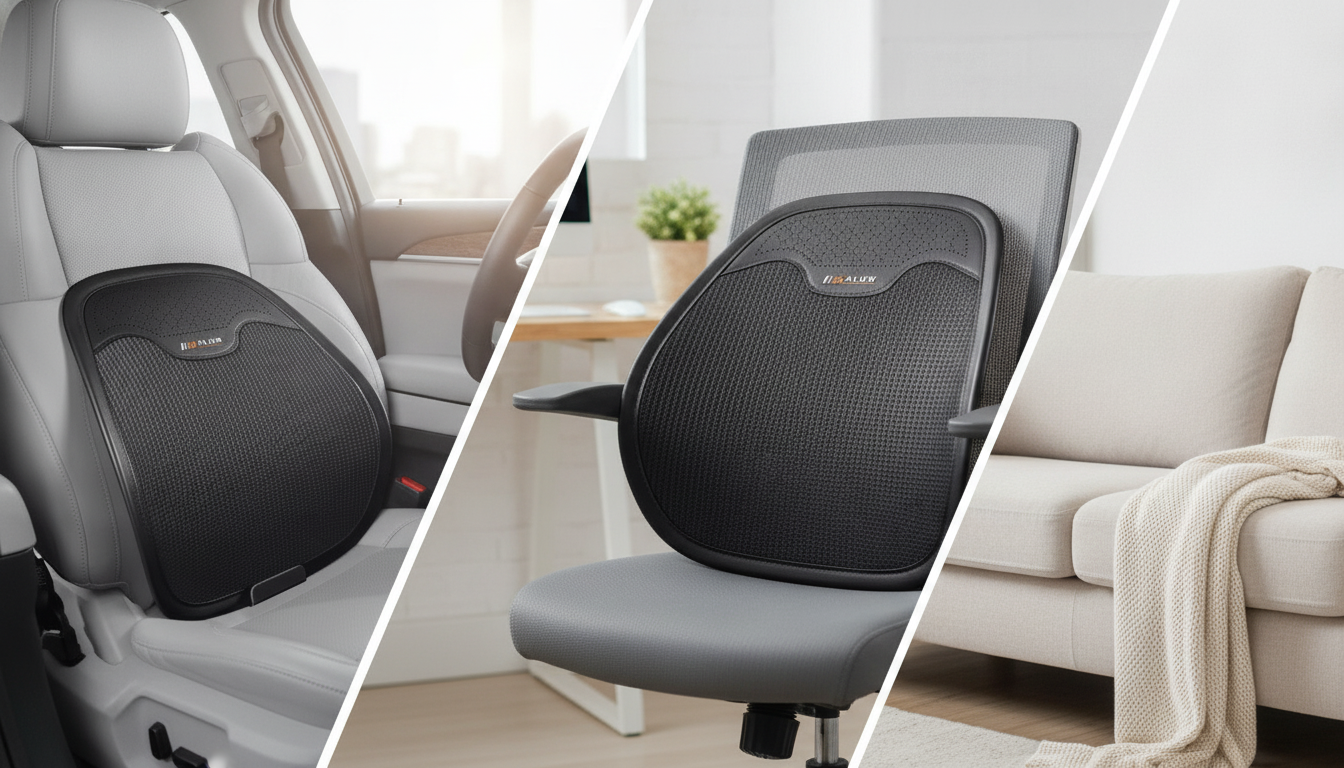
Breathable Leather Lumbar Support Pillow for Car, Office & Home
Long drives, desk hours, and couch time often share one problem: lower-back strain from poor lumbar support. A breathable leather lumbar pillow adds targeted support to help maintain a more neutral spine posture while staying comfortable across warm and cool conditions. The right setup can make sitting feel steadier and less fatiguing—without needing to replace your chair or car seat.
Below are practical ways to choose placement, fine-tune comfort, and use lumbar support across a car, an office chair, and home seating. For broader ergonomics guidance, resources from NIOSH and the OSHA Computer Workstations eTool offer helpful checklists and workstation principles.
What a lumbar support pillow changes in daily sitting
- Fills the natural curve of the lower back to reduce slouching and forward-head posture that can build up over time.
- Supports more even pressure distribution across the backrest instead of one “hot spot” on the tailbone or mid-back.
- Encourages micro-adjustments: a stable cushion makes it easier to reset posture during breaks, commutes, and meetings.
- Pairs well with simple habits: feet flat, hips back in the seat, shoulders relaxed, and regular standing intervals.
Why breathable leather can be a practical choice
- Easier wipe-clean maintenance than many fabric covers, which helps in shared spaces, rideshares, and family cars.
- Breathability helps reduce heat buildup during longer sessions, especially in warm climates or heated seats.
- A structured exterior can hold shape and position more consistently than soft cushions that compress quickly.
- A refined look suits professional office settings and blends well with home furniture upholstery.
Car setup: positioning for commutes and road trips
- Place the pillow so the thickest portion supports the small of the back, not the mid-back; adjust until the pelvis feels neutral rather than tucked.
- Keep the hips all the way back in the seat; lumbar support works best when the seat pan supports the thighs without pressing behind the knees.
- Check mirror alignment after adjusting: if the head feels pushed forward, move the pillow slightly lower or reduce recline.
- For long drives, plan brief posture resets: shoulder rolls, ankle pumps, and standing breaks every 60–120 minutes when possible.
If you deal with recurring back discomfort on the road, it can also help to review common causes and red flags shared by trusted health sources like Mayo Clinic.
Office setup: desk chair alignment that complements lumbar support
- Use the pillow with chair height that keeps elbows near 90 degrees and wrists neutral on the keyboard/mouse.
- If the chair already has built-in lumbar support, test the pillow as a supplement only if the chair support feels too low, too high, or too firm.
- Avoid over-arching: the goal is gentle support, not forcing a dramatic curve that creates tension.
- Combine with screen height adjustments so the neck stays relaxed and the upper back doesn’t round forward.
A quick self-check: once the pillow is in place, you should be able to take a relaxed breath, keep your shoulders down, and maintain contact with the backrest without “perching” at the seat edge.
Home use: couch, reading chair, and recliner tips
- Couches often encourage posterior pelvic tilt (slumping); a lumbar pillow can reduce that by supporting the low back curve.
- When reading or watching TV, keep the pillow positioned even if legs are elevated; avoid sliding forward on the seat.
- For recliners, test a slightly lower placement because recline changes how the pelvis contacts the backrest.
- If using multiple cushions, keep the lumbar pillow closest to the backrest so it supports structure rather than sinking into other pillows.
For softer sofas, a small footrest can reduce the urge to slide forward—helping the lumbar pillow stay aligned with the low-back curve.
Quick fit check: comfort cues vs. warning signs
Placement guide by seat type
| Seat type | Best starting position | Adjustment tip |
|---|---|---|
| Car seat | Thickest area at the small of the back | Lower it if the chin juts forward or shoulders tense up |
| Office chair | Centered at lumbar curve just above the beltline | Move slightly up if slouching returns quickly |
| Couch | Low back support near the deepest part of the seat | Add a small footrest if sliding forward |
| Recliner | Slightly lower than upright seating | Re-check after recline angle changes |
Care, cleaning, and keeping it fresh
Who tends to benefit most
Product snapshot: Breathable Leather Lumbar Support Pillow for Car, Office & Home
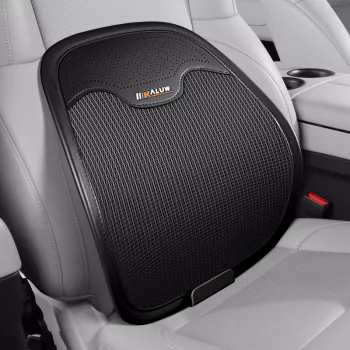
If you want one support cushion that can move between your driver’s seat, desk chair, and living room, the Breathable Leather Lumbar Support Pillow for Car, Office & Home is designed for everyday versatility. The breathable leather surface is easy to wipe clean and keeps a polished look in professional settings, while the supportive shape helps maintain consistent placement across different seats.
More in-stock picks that pair well with better sitting habits
- The Anxiety Relief Bundle: A Path to Calm for guided relaxation tools that can complement stretch breaks and decompression after long workdays or travel.
- The Smart Traveler’s Guide to Global Etiquette for travelers building smoother routines during trips where long sits (flights, trains, rideshares) are common.
FAQ
Where should a lumbar support pillow sit on the back?
Place it at the natural inward curve of the lower back (typically just above the beltline). Adjust slightly up or down until the pelvis feels neutral and the shoulders relax.
Can a lumbar support pillow be used with a chair that already has lumbar support?
Yes, but start cautiously. If the built-in support is adequate, an added pillow may feel too aggressive—try lowering it or removing it if it increases arching or pressure.
Will a breathable leather lumbar pillow get hot in the car?
Breathable designs help reduce heat buildup compared with non-breathable covers, but a parked car in direct sun can still get very warm. Parking in shade, using a sunshade, and airing out the pillow can help.








Leave a comment