Printable Family Bonding Pack for Busy Weeks
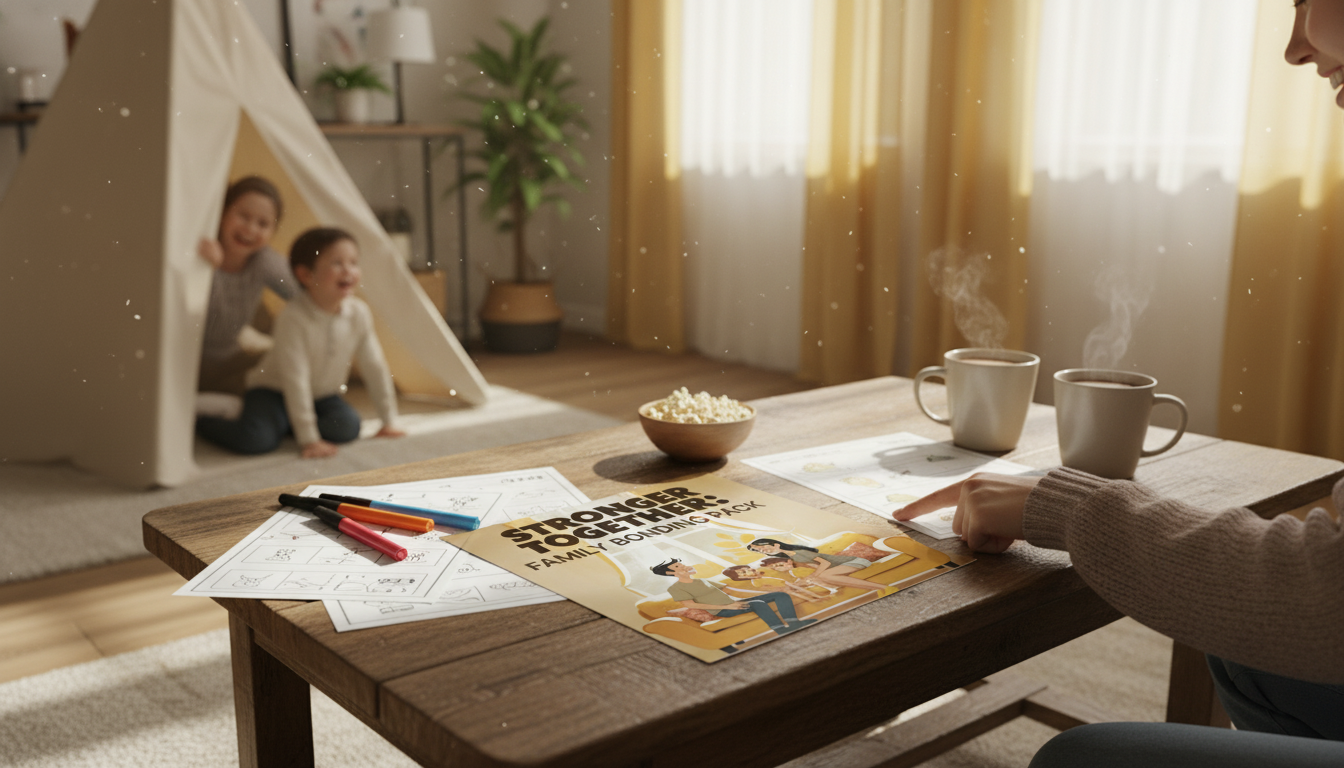
Stronger Together: Simple Family Time That Actually Fits Real Life
Busy schedules, screens, and scattered routines can make it hard to create consistent family time. The Stronger Together: Family Bonding Pack is a digital set of printable activities and an easy checklist designed to help kids and parents connect through simple moments—whether that’s a 10-minute check-in after school or an outdoor mini-adventure on the weekend.
These small, repeatable connections matter. Research-backed parenting resources frequently highlight how warm, responsive interactions support healthy development and relationships over time. If you’d like a deeper dive into the “why,” see the Harvard Center on the Developing Child on serve-and-return interaction and the CDC’s positive parenting tips.
What the Stronger Together Family Bonding Pack Includes
- Digital format for instant access: download, print, and start the same day.
- Mix of at-home and outdoor connection activities: options for different energy levels, seasons, and weather.
- Family Time Checklist: makes planning easier and reduces decision fatigue.
- eBook-style guidance: supports consistency without turning bonding into another “task” on the calendar.
The overall feel is practical and parent-friendly: structured enough to make it easy to begin, flexible enough to keep it from feeling scripted.
Who It’s Best For
- Families with kids who do better with structured choices (pick-one lists, clear steps).
- Parents who want low-prep ideas that don’t require special supplies.
- Blended families or families with multiple ages who need flexible options.
- Caregivers looking for screen-light alternatives that still feel fun and modern.
- Anyone building routines after a big change: moving, new school year, new sibling, or schedule shifts.
How to Use the Pack Without Overhauling Your Schedule
The easiest way to make family time sustainable is to keep it small and repeatable—then let it grow naturally. The checklist works best when it’s treated like a “menu,” not a mandate.
- Start with a two-days-a-week approach: one quick weekday connection + one longer weekend activity.
- Keep a small bonding basket ready: paper, pencils, tape, a ball, sidewalk chalk—simple items that remove friction.
- Circle 3 options for the week: kids choose from a short list, which cuts down on negotiation.
- Pair activities with existing routines: after dinner, before bedtime, during a walk, or on the drive.
- Aim for repeatable rituals: repeating a favorite activity builds security and anticipation.
Easy Weekly Rhythm Using the Checklist
| Time window | Goal | Activity example | Prep level |
|---|---|---|---|
| 10 minutes (weekday) | Reconnect after school/work | One question each + quick shared task | Very low |
| 20–30 minutes (weekday) | Create a shared win | Printable challenge + teamwork prompt | Low |
| 45–90 minutes (weekend) | Build memories | Outdoor connection activity (walk, scavenger-style prompt, mini-adventure) | Low–medium |
| 5 minutes (daily option) | Maintain consistency | High/low of the day check-in | None |
At-Home Connection Ideas That Don’t Feel Like Homework
When kids hear “activity,” they sometimes assume it means more work. The at-home prompts in this pack are designed to feel like relief—quick wins that create warmth without requiring a big energy output from parents.
- Short challenges that spark laughter and cooperation rather than competition.
- Conversation prompts that go beyond “How was your day?” and help kids open up.
- Creative mini-projects that can be paused and continued later without losing momentum.
- Calm-down and reset moments that work well before bed or after a tough day.
If homework time is a regular stress point, pairing bonding time with a predictable study routine can help the whole evening feel smoother. The Homework Help Made Easy Toolkit for Parents is a helpful companion for building independent learning habits without turning the kitchen table into a battleground.
Outdoor Activities for Real-World Bonding (No Big Trip Needed)
Outdoor time doesn’t have to mean planning a “perfect day.” The best connection often happens during ordinary movement—walking the block, tossing a ball at the park, or taking a slow loop around the neighborhood.
These kinds of simple, responsive moments also align with guidance on building healthy parent-child relationships, including communication patterns that help kids feel seen and supported. The American Psychological Association’s parenting resources provide useful perspective on nurturing connection over time.
Why a Printable Checklist Helps Families Follow Through
Gift-Friendly and Travel-Friendly Uses
For families traveling across cultures or visiting relatives abroad, manners and confidence can be part of “bonding,” too—especially when kids feel prepared. The Smart Traveler’s Guide to Global Etiquette offers approachable guidance that can turn trip prep into meaningful family conversations.
Related Digital Tools for Families (Optional Add-Ons)
- For homework and routines: Homework Help Made Easy Toolkit for Parents can reduce after-school stress and support independence.
- For adult well-being: The Anxiety Relief Bundle: A Path to Calm can complement family bonding by improving the household emotional tone.
- For consistent connection: the core hub is the Stronger Together: Family Bonding Pack, designed to be simple enough to repeat week after week.
FAQ
Is the Stronger Together Family Bonding Pack a physical product or a download?
It’s a digital download designed to be printed at home, so you can start the same day. Most families print only the pages they want to use that week rather than printing everything at once.
What ages does it work best for?
It works well for mixed ages because activities and prompts can be simplified for younger kids or expanded for older kids. Letting older children choose, lead, or “host” an activity can boost buy-in while keeping parents involved.
Do the activities require special supplies or lots of prep time?
Most activities use common household items and simple outdoor spaces like sidewalks, parks, or backyards. The checklist format keeps prep low by helping you decide ahead of time instead of scrambling in the moment.












Leave a comment