Pack Light Every Time: Minimalist Digital Packing Planner
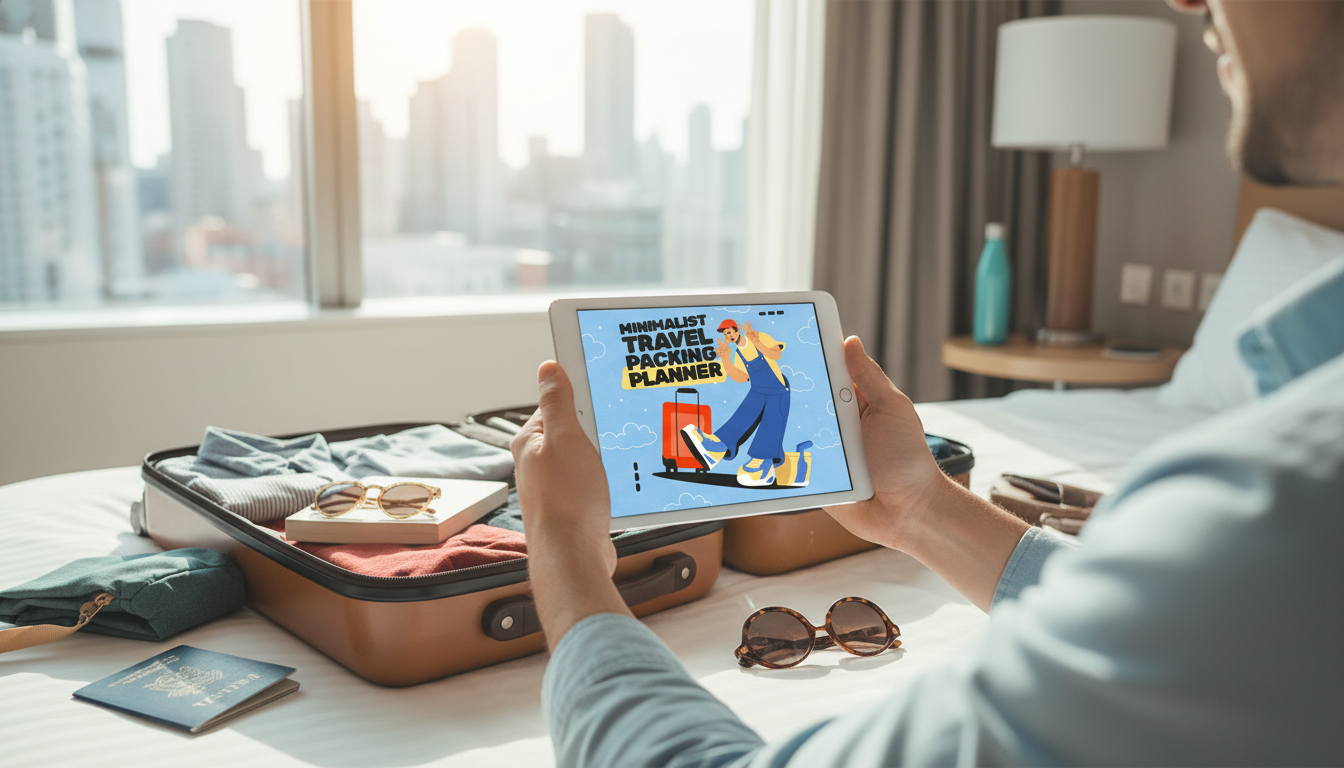
Minimalist Travel Packing Planner: a digital guide for light, smart, stress-free trips
Packing light gets easier when decisions are made before the suitcase opens. A minimalist packing system focuses on a small, versatile wardrobe, a repeatable checklist, and a quick way to adapt for weather, activities, and laundry access—so nothing important is forgotten and nothing unnecessary comes along.
If you want a ready-to-use system you can reuse for every trip, the Minimalist Travel Packing Planner | Digital Packing Guide for Light, Smart & Stress-Free Trips helps you turn “packing” into a simple routine instead of a last-minute scramble.
Why minimalist packing feels easier (and works better)
Minimalist packing isn’t about deprivation—it’s about reducing friction. When you bring fewer, better-chosen items, travel becomes calmer from door to destination.
- Fewer items means fewer decisions: less time packing, less time repacking, less rummaging on the road.
- A repeatable plan reduces “just in case” overpacking: replace guesses with simple rules (outfit counts, laundry cadence, and activity needs).
- Travel days become smoother: lighter bags are easier on shoulders, faster through transit, and simpler in tight spaces.
- Minimalism supports flexibility: a tight core wardrobe leaves room for local purchases or souvenirs without baggage stress.
- A digital planner makes the process reusable: duplicate trips, swap climates, and update templates without rewriting lists.
Build a carry-on-ready capsule wardrobe in minutes
A capsule wardrobe is a small set of pieces that all work together. The goal: more outfits with fewer items, and nothing that only matches one thing.
- Start with a color palette: pick 2 neutrals + 1 accent color to maximize mix-and-match outfits.
- Choose “one of each function”: one warm layer, one rain option, one comfortable walking shoe, and one nicer outfit component.
- Use outfit math: plan outfits by day type (travel day, city day, active day, dinner) instead of packing by item category.
- Prioritize fabric performance: quick-dry tops, wrinkle-resistant pants/skirts, and breathable base layers reduce the need for extras.
- Limit duplicates with a laundry plan: if laundry is possible mid-trip, cut clothing quantity by 30–50% and add one travel detergent option.
For trips that include meetings, restaurants, or cultural sites, it also helps to avoid outfit mistakes that draw the wrong kind of attention. Pair your packing system with The Smart Traveler’s Guide to Global Etiquette to keep choices simple and appropriate across destinations.
A simple packing formula (by trip length and laundry access)
Minimalist packing works best when the “rules” are consistent. Start with a baseline set (tops + bottoms + underwear/socks + layers + shoes + toiletries), then adjust using only three variables:
- Climate: warm, cold, or wet.
- Activity intensity: casual, active, or formal.
- Laundry frequency: none, once, or often.
Keep must-not-forget essentials separate and visible: passport/ID, payment cards, meds, glasses/contacts, chargers, and keys. Pack those first and check them last.
For toiletries, stay within airline rules and choose refillables, solids, or minis. The TSA 3-1-1 guideline is a helpful baseline for carry-ons; verify current details here: TSA: Liquids Rule (3-1-1).
Minimalist packing formula (starting point)
| Trip type | Tops | Bottoms | Underwear/Socks | Shoes | Notes |
|---|---|---|---|---|---|
| Weekend (2–3 days), no laundry | 3 | 2 | 3–4 | 1–2 | One layer; travel outfit counts as day 1 |
| 5–7 days, laundry once | 4–5 | 2–3 | 5–7 | 2 | Add quick-dry pieces; keep toiletries minimal |
| 10–14 days, laundry often | 5–6 | 3 | 7–9 | 2 | Repeat outfits; prioritize lightweight layers |
Aim for a small emergency buffer only: one extra base layer and one extra underwear pair beyond the plan—then stop.
Set up your digital packing planner for repeatable trips
A digital planner is most useful when it’s designed for copying, toggling, and quick edits—so you’re not reinventing the list every time.
- Create templates: “Warm city,” “Cold weekend,” “Beach + hiking,” and “Business casual” as reusable presets.
- Break the list into packing zones: on-body (travel day), personal item, carry-on/main bag, and checked bag (if used).
- Add conditional items with toggles: “If rain forecast,” “If formal dinner,” “If gym,” “If remote work.”
- Include a pre-trip timeline: 7 days (laundry), 3 days (purchase/refill), 1 day (charge devices), travel morning (final checks).
- Track weights and limits: note airline carry-on rules and keep a running estimate for peace of mind. For general baggage guidance, see IATA: Passenger Baggage Information.
Pack smarter: space, weight, and quick access
Once your list is tight, the next win is packing for speed. The aim is to reach what you need in transit without turning your bag into a floor explosion.
Common overpacking traps (and the minimalist fixes)
If packing anxiety tends to spike right before departure, a quick grounding routine can help you stick to your plan instead of adding “panic items.” Consider The Anxiety Relief Bundle: A Path to Calm as a pre-trip reset you can return to whenever travel feels mentally noisy.
Using a minimalist packing planner for different trip styles
Wherever you’re headed, it’s also smart to check destination-specific health guidance and recommended travel preparations: CDC: Travelers’ Health.
FAQ
How do you pack light without forgetting essentials?
Use a digital checklist with a fixed “must-not-forget” core (documents, meds, chargers) plus trip-specific toggles, then pack essentials first and do a final audit before closing the bag.
What’s a good minimalist packing list for a 7-day trip?
A practical range is 4–5 tops, 2–3 bottoms, 7 underwear/socks, 2 shoes, and light layers. Adjust up or down based on laundry access, climate, and how many activities require specialized clothing.
Is a carry-on-only approach realistic for longer trips?
Yes—especially if you can do laundry and you build a capsule wardrobe. Repeating outfits, choosing quick-dry fabrics, and keeping a consistent toiletry kit make longer carry-on trips much easier.









Leave a comment