Modern Etiquette Micro-Course: Texting, RSVPs, Social Media

Modern Etiquette That Works in Real Life (and Real Time)
Politeness still matters—it’s just happening faster, on more platforms, and with fewer shared assumptions than ever. A “thanks,” a timely RSVP, or a clear text can prevent the kind of low-grade friction that turns simple interactions into stress. That’s why a micro-course approach works so well: quick, modern guidelines you can actually use when you’re about to hit send, reply to an invite, or navigate an everyday moment that feels oddly high-stakes. For more guidance, see [PDF] FAIRFIELD UNIVERSITY COURSE DESCRIPTIONS 2025-2026.
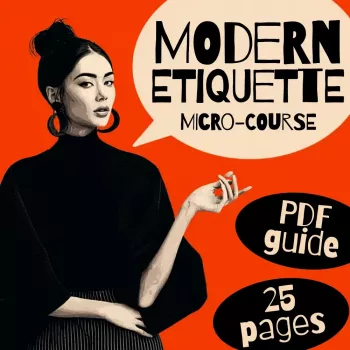
If you like having a reference you can keep open on your phone or print for a desk drawer, the Modern Etiquette Micro-Course | Printable Digital Etiquette Guide is designed for exactly that: practical prompts for texting, social media, RSVPs, and daily politeness—without turning life into a rulebook. For further reading, see [PDF] SOCIAL ETIQUETTE ETIQUETTE FOR INTERACTIONS IN SOCIETY.
What “modern etiquette” covers (and why it’s different now)
Modern etiquette is less about memorizing formal scripts and more about reducing misunderstandings with small, repeatable choices. The goal is simple: make people feel respected without making communication feel stiff.
Digital life adds variables older etiquette books didn’t have to address—read receipts, time zones, group chat dynamics, screenshots, and “context collapse” (when different parts of someone’s life collide in one comment thread). Research on technology use shows how online spaces can amplify misreads and conflict when tone and context are thin; see Pew Research Center’s Internet & Technology coverage for ongoing data and trends.
A quick self-check that travels well across situations:
- Is it kind? (No cheap shots, no unnecessary edge.)
- Is it clear? (No guessing games, no buried requests.)
- Is it appropriate? (For the relationship, setting, and stakes.)
For traditional foundations that still apply—gratitude, introductions, host/guest respect—the Emily Post Institute’s etiquette guidance remains a helpful baseline. Modern etiquette simply updates the “where” and “how” those values show up.
Texting basics that prevent awkwardness
Texting is convenient precisely because it’s low-friction—until it isn’t. A few small habits keep messages from sounding demanding, confusing, or oddly intense.
- Match urgency to the channel. If it’s truly time-sensitive, call or send a text that clearly says what you need. Avoid “???” or repeated pings when it can wait.
- Make requests skimmable. Lead with purpose, include key details, and end with a clear next step.
- Respect work hours and time zones. Unless your relationship supports off-hours texts, schedule it for the morning or keep it non-urgent.
- Use group chats carefully. Don’t add people to new groups without context; avoid flooding; use replies/threads if available.
- Repair tone fast. If a message lands wrong, a simple clarification beats a multi-paragraph defense.
Quick etiquette guide by channel
| Situation | Best practice | What to avoid |
|---|---|---|
| Quick update | One clear message with key detail | Multiple fragmented texts that bury the point |
| Time-sensitive change | Call or text + confirm receipt if needed | Assuming someone saw it because it was sent |
| Group plans | Summarize options and propose a decision time | Endless back-and-forth with no next step |
| Delicate feedback | Use a call or private message; be specific and kind | Critiquing in group chats or public comments |
| No reply yet | Wait, then send one gentle follow-up | Repeated pings, guilt-tripping, or passive-aggressive messages |
Social media etiquette: comments, DMs, tags, and privacy
Social platforms blur the line between public and personal. Good etiquette here is mostly about consent, discretion, and avoiding performative conflict.
- Ask before tagging or posting others. Especially with sensitive topics, awkward moments, or children.
- Assume screenshots are possible. If it would damage trust when shared, don’t post or DM it.
- Public vs. private matters. Handle disagreements in DMs when possible; keep public comments brief and constructive.
- Correct gently—or don’t. “Drive-by” corrections often read as status plays. If accuracy matters, keep it factual and kind.
- Respect boundaries quietly. Muting or unfollowing is fine; announcing it is rarely necessary.
RSVPs and invitations: the fastest way to be considerate
When someone hosts, plans, reserves, or budgets, the kindest thing you can do is reduce uncertainty.
Everyday politeness that makes interactions smoother
How the printable micro-course fits into a busy schedule
If you want a broader, travel-focused companion for cultural settings, The Smart Traveler’s Guide to Global Etiquette pairs well with modern day-to-day etiquette, especially when you’re switching between local customs and international expectations.
A simple “pause checklist” for tricky moments
For a structured, printable way to build these habits across texting, social media, RSVPs, and everyday interactions, the Modern Etiquette Micro-Course is a practical reference you can keep close—without turning common courtesy into a full-time job.
FAQ
What’s the difference between traditional etiquette and modern etiquette?
Traditional etiquette emphasizes established customs, while modern etiquette focuses on clarity, consent, and context—especially across digital channels. The goal stays the same (respect), but the situations and pace have changed.
How quickly should an RSVP be sent?
As soon as possible. If you can’t confirm yet, acknowledge the invitation and give a firm date you’ll respond by, using the method the host requested.
Is it rude to leave someone on read?
Not always—it depends on urgency and your relationship. For time-sensitive or emotional messages, a brief acknowledgment (“Saw this—replying after work”) is often the considerate choice.











Leave a comment